My tracker tells me I started 70 books this year and finished 30. The 30 include several re-reads. The five books I’m recommending here are first time reads that I finished this year. So, no Solenoid for now, since I haven’t finished it yet. No Moby-Dick since I’ve read it before. No particular order here for these five books.

Cold Enough for Snow (2022) by Jessica Au
I love this ethereal passage from Jessica Au’s Cold Enough for Snow, a short (95 pages), compelling novel of a woman’s trip to Japan with her mother. This comes late in the book. The narrator and her mother have been traveling together in Japan for a couple of weeks, but this passage occurs as the narrator takes a day to herself to hike a mountain trail in the rain.
Soon, I had the left the road and was on the trail. In some places, the path was like a corridor, surrounded by trees on either side, tall and spirit-like, swaying around me as if to a sound I could not hear. The earth smelled cold and rich, like the bottom of a well, and the path wound steeply upward, wet and muddy in places. I passed by a river and two small waterfalls, who sound was almost indistinguishable from the rain. The water as it poured down the rocks was bright and white, like salt. I thought of nothing and no one. On a rock near my feet, there was a tiny frog, the same color as an autumn leaf. The trail continued to wind through a combination of of villages and mountains. I disappeared in and out of the forest like a character in a book. From a house high up on a hill, a medium-sized dog, its coloring somewhere between a fox and a coyote, with its tail curved upward, watched me go by. I thought of my mother, and how some day in the future, I would go with my sister to her apartment, the one I had never seen, with the single task of sorting through a lifetime of possessions, packing everything away. I thought of all the things I would find there—private things like jewelry, photo albums and letters, but also signs of a careful and well-organized life: bills and receipts, phone numbers, an address book, the manual for the washing machine and dryer. In the bathroom, there would be half-used glass vials and jars of creams, signs of her daily rituals that she did not like anyone else to see. My sister, I knew, ever methodical, would suggest we sort things into piles: things to keep, things to donate, things to put in the trash. I would agree but, in the end, I knew I could keep nothing, whether out of too much or too little sentiment, I did not know.
Like many passages in this book, this one deftly changes registers. It begins with a the elusive tone of a poem (the spirit-like trees, a sound the narrator cannot hear, thoughts of nothing and no one, images of nature) and descends to the every day. We’re given many descriptions in the book of everyday objects. Bowls, socks, gloves. It’s Au’s great skill in moving in and out from her searching, ambiguous style to the modest and quiet descriptions of daily life that makes those everyday things seem almost haunted. The Library of Congress subjects listed at the front of the book say: “Mothers and daughters—Fiction” and “Domestic fiction—Novels.” The book is so much more than that. I recommend it to you.

Voss (1957) by Patrick White
This is the second year in a row I’ve personally discovered an all-timer. Last year it was The Red and the Black. This one is not in my all-time Top 10, but it is close, and it’s one of those books that makes me realize I’ll have to read everything White has written. It’s an amazing book that could serve as a connector between Moby-Dick and Blood Meridian but also as a connector between Jane Austen and Shirley Hazzard. I thought The Transit of Venus was pretty sui generis, but, clearly, I hadn’t known about this book. I’d also like to find out if McCarthy read this. The best comparison might actually be to say it’s a mix of Austen and Heart of Darkness, and it is as strange as that mix sounds in the very best way.
It’s a historical novel set in the 1840s with a 20-year time jump in the final chapters. Voss like Ahab and Glanton leads an expedition into a zone of death. In this case, the zone is the vast unknown (to white men) interior of Australia. White was gifted with bottomless powers of description. Landscapes, people, psychological states. As beautiful as the style is, there is little waste. It’s a style that McCarthy following Faulkner and Hemingway put in a rock tumbler and polished even further until it was perfectly efficient. The narrator is third person, but it is weird. It’s often tightly close to one character, but it bounces around within scenes and approaches omniscience while avoiding certain minds for long periods of time. The gang that follows Voss into the bush is memorable. Each is stamped and opened up, spirit and will examined sometimes to the point of humiliation but rarely without honesty.
Over all this scene, which was more a shimmer than the architecture of landscape, palpitated extraordinary butterflies. Nothing had been seen yet to compare with their colours, opening and closing, opening and closing. Indeed, by the addition of this pair of hinges, the world of semblance communicated with the world of dream.
This moment occurs within a larger context of surprise for me. In the middle of the desert trek, the worst challenges and disasters for the gang come from heavy rain. It is really something.
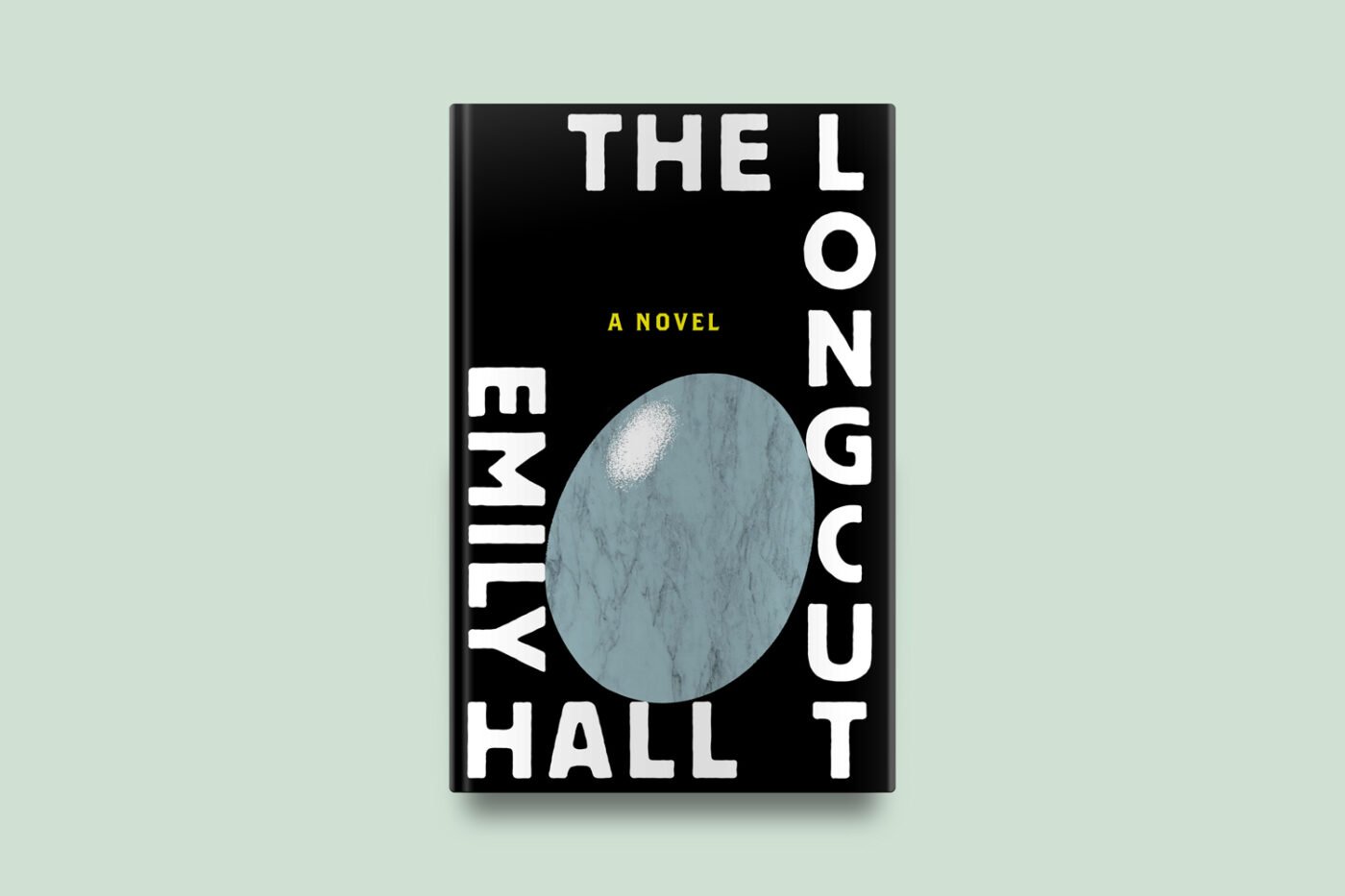
The Longcut (2022) by Emily Hall
I ran, I ran, running however I thought I would be careful how I told it, the story. What was important was to not find the right words.
The author of this short, brilliant book finds the right words. It is an exercise in how the perfect words and the right punctuation can push language to an obsessive clarity. This is one of the many things fiction can do: deliver the essence of another being’s thinking. When done with such care, as Hall does with this book, the world never goes flat, and that is one of the narrator’s concerns, “keeping the world from going flat.” The narrator is an artist who is concerned about the question of her art, and this question is also about how to be in the world. If you like Thomas Bernhard (Correction, Concrete, The Loser) or David Markson (Wittgenstein’s Mistress), two influences on this novel, you’ll like this book.
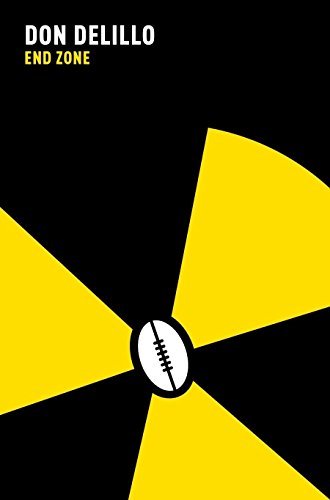
End Zone (1972) by Don Delillo
Great book. 5 stars easy. Like DeLillo’s other novels The Names and White Noise, this book is extremely interested in observing the impact of words and how languages work (and don’t). There are “alien sounds” and wall tappings and German language hilarity and talking mouths and weirdness about vowel sounds and, perhaps above all, jargon. Science and military and football. It’s all pretty compelling.
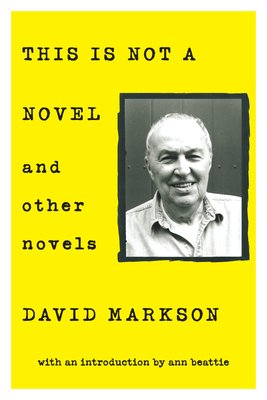
This is Not A Novel (2001)
Vanishing Point (2004)
The Last Novel (2007)
By David Markson
Markson creates his own genre. I’ve read his haunting Wittgenstein’s Mistress probably five times, but I’d never read these books prior to this year. The fragments add up to something grand in their accumulation. They show the ever-blooming personalities of the artists and writers of Western culture, most of them, but not all of them, from the Renaissance to the present. They are full of sadness and insult (writers against other writers, painters against other painters, critics against everyone), exuberant confidence and crushing doubt, wrongheaded contemporary reviews of classic works, and, perhaps above all, the ways these geniuses lived and died, often tragically. The anecdotes can be as arresting and surprising as life itself. I don’t recall ever reading anything else like these books.

 Talking Big
Leave a comment